Note ·
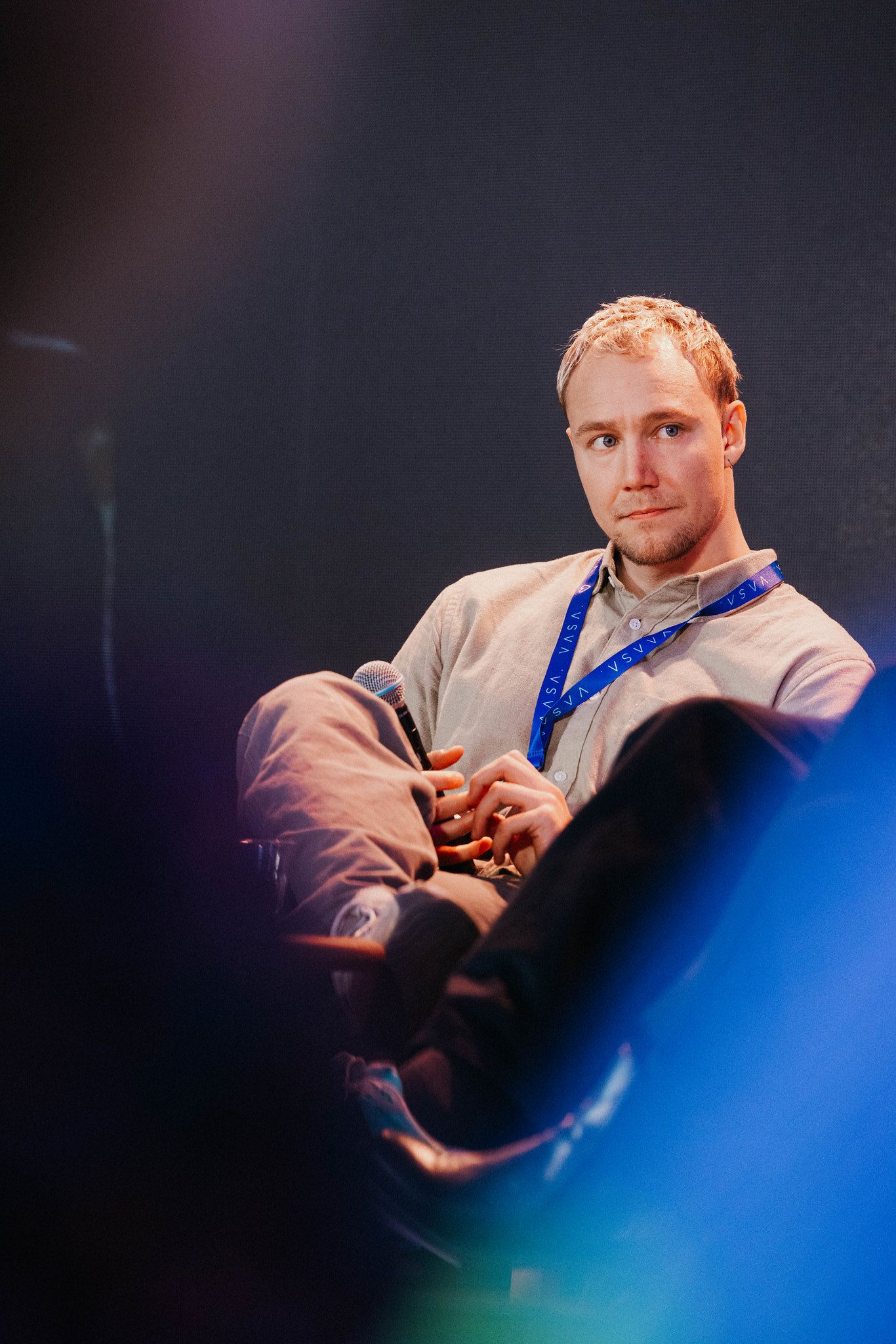
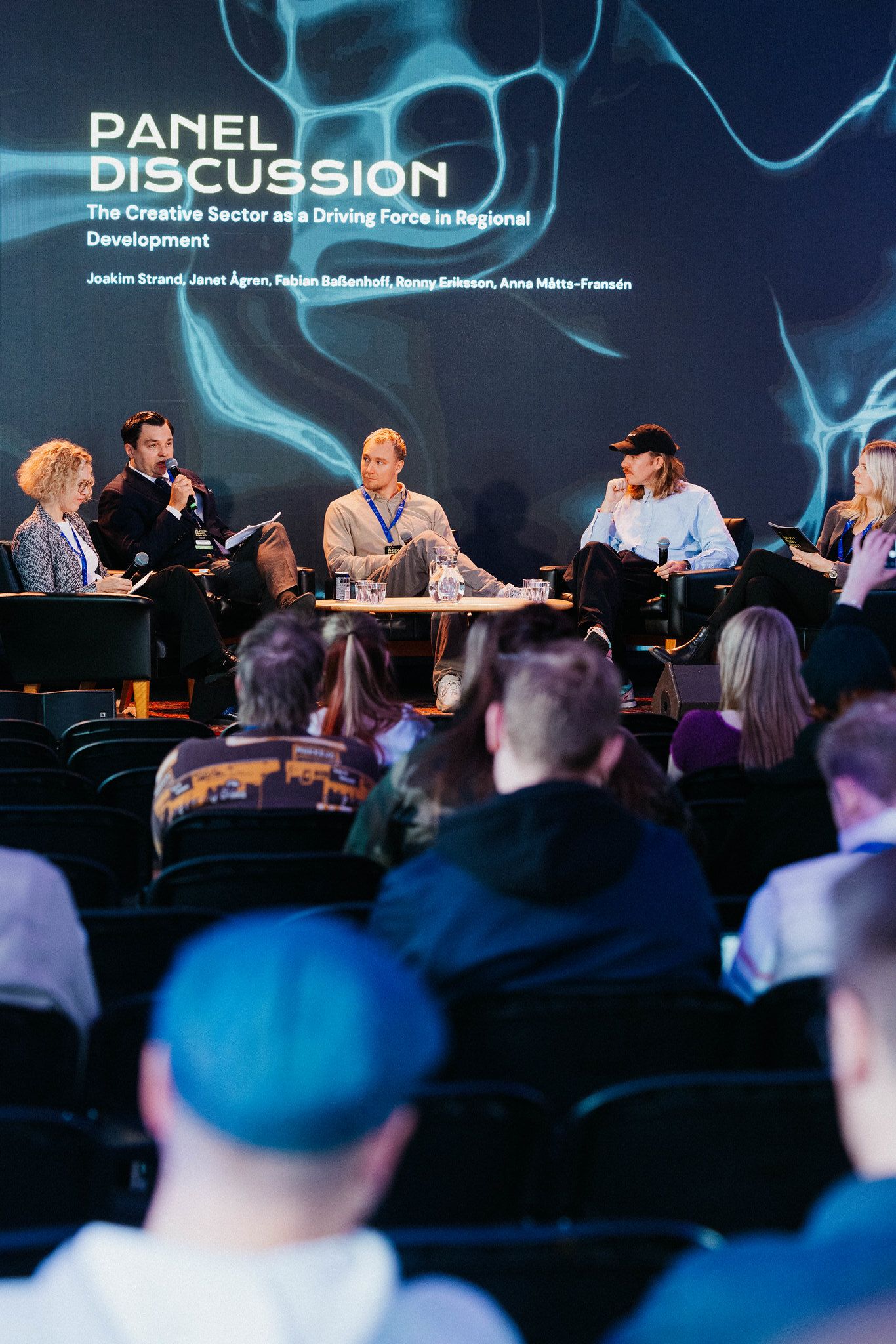
Lokstallet is an old engine shed in Vaasa. On the last Friday of September it was full of musicians, producers, bookers and students: the people who make a region sound like somewhere.
I love rooms like that. Nobody is there because it looks good on a CV. They’re there because they make things, and they want the things they make to matter.
The people who write regional strategies are usually somewhere else. This time a member of parliament, a municipal commissioner from Umeå and a music-policy lead from Hamburg were on the stage with me. That alone made the trip worth it.
Creativity is not a side project
Anna Måtts-Fransén from VASEK, the region’s development company, opened with a question about me:
You’ve built your work on the idea that creativity should not be a side project. Is it so?
It is. Most organisations treat creativity like a team-building day: nice, held somewhere else, and the first thing to go when the budget tightens. Creatives feel that. They get invited to decorate the strategy, never to write it.
I came to culture from the other side. Business school, startups, money. For years I was the business guy in the creative room, and the creative guy in the business room. Both rooms taught me the same thing: business and creativity need each other more than either will admit. Business has the structures. Creatives have the reason people show up.
ODDfest started from that bet. In two years, more than 5,000 people have shown up and 500+ collaborators have built it with us. Side projects don’t get that far.
Trust the creatives with the money
What do regions get wrong? They consult creatives, and then they hand the budget to someone else.
Creatives get the workshop, the survey and a seat at the end of the table. The money goes to whoever is best at filling in the forms. Then everyone wonders why the result feels like a brochure.
Give creatives the possibility to lead. Not a consultation: the budget, the decisions, and the responsibility that comes with them. Some will fail. So do projects run the other way. The difference is that when creatives lead, even the failures leave something behind: a scene, a venue, people who now know each other.
We’ve tried to live by it. In ODD’s first two years, more than €400,000 went directly into the creative and cultural industries. Into the people who make things, not into reports about them.
Teach each other
Trust goes both ways, and so does learning.
Regions should learn from creatives how to make events. Creatives fill rooms on no budget, at short notice, with people who come back next year. Most official events can’t do that with ten times the money. That’s a skill, not a hobby.
And creatives should be taught how leaders and politicians think. How a budget year works. What risk looks like from a council chamber. Why a good idea needs one sentence a minister can repeat. I learned that language by raising money for things that didn’t exist yet. The next generation shouldn’t have to learn it alone.
When both sides speak a little of the other’s language, business and creativity finally find one another.
Bring the world here
Anna quoted a fresh survey from Entrepreneurs in Finland: 58% of creative growth companies say they need a lot of support to go international, and a shortage of resources is the biggest barrier. I recognise every number.
The usual answer is to send creatives abroad, one grant and one plane ticket at a time. I’d flip it. Bring the world here.
Slush showed it for startups: invite the world’s investors to Helsinki in the darkest weeks of the year, and they come. Hamburg has the Reeperbahn Festival, where the music industry comes to the city every September. Finland could do the same for its creatives. Bring the bookers, curators, buyers and press to us, and let our people be discovered at home, in front of the world.
Why culture matters more in an AI world
AI can write the brochure, compose the jingle and generate the poster. Cheaply, and by tomorrow.
It can’t make anyone belong. It can’t build trust. It can’t make a room feel something together. Those are made by people, in rooms, over time, and that’s exactly what creatives are good at. It’s the core of my talk Time to be human: when everything can be generated, what people care about is what can’t be.
We talk a lot about protecting culture. I’d turn the question around. Without creativity, what is there left to protect?
€10 million: build our own Horst
The last question went to all of us. You get €10 million to strengthen your region, and you can spend it on one creative initiative. What do you choose?
A home, not a one-off. And the best example I know is Horst.
Horst runs all year on Asiat Park, a former military site in Vilvoorde, just north of Brussels. There’s a three-day festival that turns the site into a temporary city of dancefloors, sculptures and pavilions. There’s a club that runs through the winter. And there’s an atelier, where artists, architects and the community shape what the place becomes. The city is turning the old site into an open, creative public space, and Horst has been the catalyst.
That’s what €10 million should build in a Nordic region. Not another festival weekend. A place:
- an old industrial site, handed to creatives on a long lease, not a one-year pilot
- a festival as the moment the world notices
- a club, a venue and studios for the other fifty-one weeks
- residencies where artists, architects, companies and the city build it together
- creatives in charge of the money, with business people beside them, not above them
We were sitting in an old engine shed while we talked about it. The buildings are already here. What’s missing is the trust.
We’re testing a small version in Vallila: ODDspace, a workspace, event space and studio where creative people and companies share a roof. Ten million would let a region skip the testing.
Who else was on the stage
The best part of the panel was who sat on it. Joakim Strand has represented Vaasa in parliament since 2015 and brought the national view. Janet Ågren is a municipal commissioner in Umeå, a city that was European Capital of Culture in 2014, and chairs MidtSkandia, which links Sweden, Finland and Norway. Fabian Baßenhoff leads EU cooperation and public affairs at Hamburg Music, the city’s music business association. And Anna, from the region’s own development company, asked the questions.
Politics, policy, regional development and a founder, on one stage, talking about culture as the engine rather than the extra. That’s rarer than it should be.
What I took home
- Trust is the missing budget line. Money without trust becomes a project. Money with trust becomes a scene.
- Events are a skill. Regions should hire creatives to make them, and learn from how they do it.
- Translation goes both ways. Creatives learning how decision-makers think matters as much as the other way round.
- Discovery doesn’t need a plane ticket. Bring the world to Finland.
- In an AI world, belonging is the scarce thing. Culture makes it.
What I’m still thinking about
Everyone on that stage agreed that culture belongs at the centre of regional strategy. The audience nodded. But most of the people who write those strategies weren’t in the room, and I’m not sure we convinced anyone who wasn’t already convinced.
So the next version of this panel should happen at a business forum, with the creatives as the guests. If you’re organising one, I’d love to be on it.
The questions I was asked
- You’ve built your work on the idea that creativity should not be a side project. Is it so?
- How do creative communities contribute to entrepreneurship and innovation in regions?
- Creative businesses want to go international, and many say they need support to do it. Do you recognise that, and what barriers do you see coming?
- What do regions get wrong when it comes to integrating the creative industry?
- You get €10 million to strengthen your region, for one creative initiative. What do you choose, and why?
Thank you to DUNK and Nordic Music Creators for Aurora, to Fredrik Furu and Hilde Talus Losvik for the invitation, and to Simone Åbacka for the photos.